Transforming Homes with Professional Painting Services • Licensed • Bonded • Insured
Transforming Homes with Professional Painting Services • Licensed • Bonded • Insured

Paper Tape vs Mesh Drywall: Which Should You Use?
When comparing paper tape vs mesh drywall tape, the right choice depends on the joint, the compound, and how the drywall is installed. Paper tape is commonly used for flat seams and inside corners because it forms a strong, embedded joint when installed correctly. Mesh tape is self adhesive and convenient for certain repairs, but it generally requires setting type joint compound to reduce the risk of cracking.
TL;DR
- Paper tape: A strong option for flat drywall seams and inside corners. It needs to be embedded in joint compound and takes practice to install without bubbles or wrinkles.
- Mesh tape: Easier to position on many repairs because it sticks to the drywall. It is commonly paired with setting type compound, particularly where joint strength matters.
- For new drywall: Paper tape is a common choice for seams and inside corners.
- For repairs: Mesh can be convenient for small patches, but the repair’s size, location and compound matter.
- For cracks: Neither tape can reliably fix an underlying movement problem. The cause of the crack needs to be addressed.
What Is the Difference Between Paper Tape and Mesh Drywall Tape?
Paper and mesh tape both reinforce drywall joints, but they work differently. Paper tape is a non adhesive strip that gets embedded in joint compound. Mesh tape is a woven fiberglass material with an adhesive backing that holds it in position while the joint is finished.
The biggest practical difference is how each tape interacts with the compound. Paper tape relies on a continuous bed of compound beneath it. Mesh tape has openings that allow compound to pass through, but those openings don’t automatically make the finished joint resistant to cracking.
Paper drywall tape
Paper tape is a flat, usually creased strip of paper. It is placed over wet joint compound, pressed into the compound and covered with additional coats as the joint is finished. The crease helps it fold neatly for inside corners.
Mesh drywall tape
Mesh tape is a woven fiberglass strip with a visible grid pattern. Its adhesive backing lets it stick directly to clean, dry drywall, making placement convenient, especially on some repairs and irregular areas.
Why compound compatibility matters
Paper tape is designed to be embedded in joint compound. All-purpose compound is commonly used for this, although product instructions and the particular application still matter.
Mesh tape is generally paired with setting type joint compound, often called hot mud. Setting type compounds harden through a chemical reaction rather than relying only on water evaporation. This helps create a firm joint around the mesh.
Using standard premixed compound with mesh isn’t automatically forbidden for every product or application, but it can increase the risk of joint cracking. Check the tape and compound manufacturer’s instructions rather than assuming all combinations perform alike.
Paper Drywall Tape: Advantages & Limitations
Paper tape has been used for drywall finishing for decades because it creates a reinforced joint when properly embedded. Its performance depends heavily on the quality of the compound bed and the way the tape is pressed into it.
How paper tape is installed
- Apply a continuous layer of joint compound along the seam.
- Center the tape over the joint while the compound is still wet.
- Press the tape into the compound with a drywall knife, removing excess compound and air pockets.
- Apply a thin coat over the embedded tape as needed.
- Allow the compound to dry or set according to its instructions before applying additional coats.
The goal isn’t to squeeze every bit of compound out from under the paper. The tape needs enough compound beneath it to bond across its width. Too little compound can leave dry areas and cause bubbles or loose sections.
Advantages of paper tape
- Strong embedded joint: When properly installed, paper tape creates a continuous reinforced connection across the seam.
- Useful for inside corners: Its center crease makes it easier to fold and position neatly where two drywall surfaces meet.
- Works with common finishing systems: It is compatible with many standard drywall joint compound systems when installed according to instructions.
- No adhesive backing to manage: The installer controls the tape’s position through the wet compound rather than relying on the drywall surface to hold it.
Limitations of paper tape
Paper tape requires a little more care during installation. It doesn’t stick to the wall by itself, so it can shift while being embedded. A poorly applied compound bed can also trap air beneath the tape. Common problems include:
- Bubbles caused by inadequate compound or trapped air.
- Wrinkles caused by uneven placement or poor handling.
- Loose edges caused by insufficient embedding.
- Raised seams caused by excessive compound or inadequate feathering.
Paper tape is not immune to cracking. If the framing moves, the drywall isn’t adequately supported or the joint is subjected to repeated stress, the finished seam can still crack.
Mesh Drywall Tape: Advantages and Limitations
Mesh tape is particularly convenient when the installer needs the tape to stay in place before applying compound. Its open weave also allows compound to pass through the material.
How mesh tape is installed
- Make sure the drywall surface is clean, dry and free of loose material.
- Center the mesh tape over the seam or repair.
- Press it firmly onto the surface so it adheres without wrinkles or loose edges.
- Apply the specified joint compound, working it through the mesh.
- Allow the compound to set or dry as directed, then apply additional finishing coats.
Mesh tape is often used with setting type compound because of the way the material and compound work together. The exact product instructions should determine the application and coating sequence.
Advantages of mesh tape
- Self adhesive placement: It sticks to the drywall, which can make positioning easier, particularly on small repairs.
- Convenient for patches: It can be useful for covering seams around certain drywall patches without first spreading a bed of compound.
- Open weave: Compound can pass through the grid, helping it surround the tape during application.
- Useful for selected repairs: Its flexibility and adhesive backing can make it practical for some flat seams and repair situations.
Limitations of mesh tape
Mesh tape isn’t a shortcut around proper joint preparation or compound selection. Its flexibility and open structure don’t guarantee a crack free joint. Potential problems include:
- Cracking when used with an unsuitable compound or in a joint that moves.
- Poor bonding if the surface is dusty, damp or otherwise unsuitable for the adhesive.
- Raised or uneven seams when too much compound is applied at once.
- Difficulty achieving a clean finish if the mesh texture isn’t fully covered.
Mesh tape also doesn’t automatically solve structural problems. If a seam keeps opening because the framing is moving or the drywall is poorly secured, applying more tape may only conceal the symptom temporarily.
Looking for a Trusted Painting Team?
Planning a painting project? Bear Painters is ready to help with professional service, quality workmanship and results built to last.
Paper Tape vs Mesh Drywall
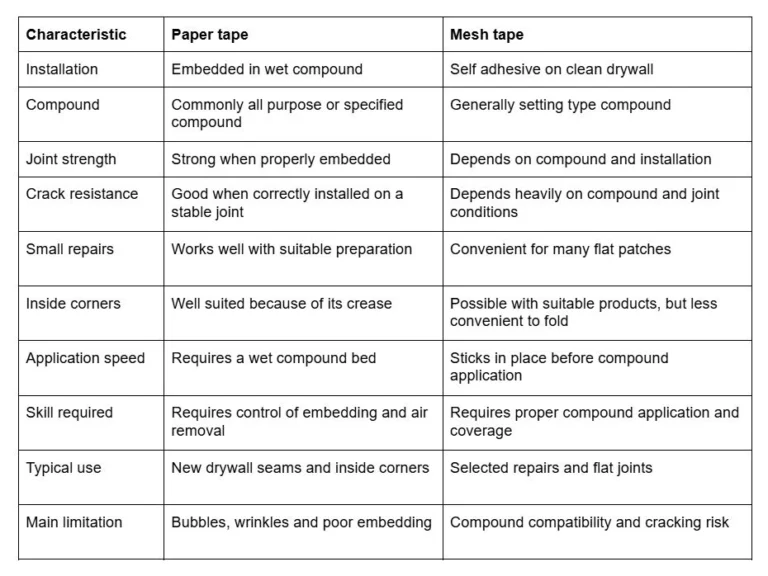
The table describes common uses, not guarantees. Product specifications, drywall conditions and the installer’s technique can change the outcome.
When Should You Use Paper Drywall Tape?
Paper tape is a practical choice when you’re finishing new drywall, especially where a consistent, reinforced joint and a clean finish are priorities. Consider paper tape in these situations:
1. New drywall seams
For ordinary butt joints and tapered factory edges, paper tape is a widely used option. It embeds into compound across the seam and subsequent coats can be feathered outward to make the joint less noticeable after painting.
Butt joints deserve particular care because the drywall edges don’t have the recessed profile of tapered edges. They usually need a wider feathered finish to avoid a visible ridge.
2. Inside corners
Paper tape’s crease helps it fold along the center and sit in the angle between two walls or between a wall and ceiling. It can reinforce both sides of the corner while keeping the fold consistent.
The corner still needs an even compound bed on both surfaces. Too much compound can leave a bulky angle, while too little can cause weak bonding or loose edges.
3. Projects using a conventional finishing system
If you’re using a standard drywall finishing process based around premixed joint compound, paper tape is often a straightforward choice for ordinary seams. Follow the compound manufacturer’s instructions for embedding, drying and recoating.
4. Joints where the finish needs to remain flat
Paper tape can work well on flat seams when the installer controls the compound thickness and feathers the edges properly. The tape itself is thin, but the finished joint still needs multiple coats to blend into the surrounding surface.
When Should You Use Mesh Drywall Tape?
Mesh tape can make sense when its adhesive backing and open weave suit the repair and the compound system.
1. Small, stable drywall patches
For a small, well supported patch with clean edges, mesh tape can be convenient because it stays in place while you apply compound. The patch must still be properly supported and secured. Tape alone cannot replace backing or fastening where those are needed.
2. Repairs where positioning is awkward
The adhesive backing can help hold tape in position on certain flat repair areas, particularly when you don’t want to manage a loose strip while applying the first coat.
3. Applications using compatible setting type compound
Mesh tape is commonly used with setting type compound. This combination can be useful where the repair calls for a compound that hardens relatively quickly, provided the installer can apply and finish it within the product’s working time.
Setting compounds vary in working time and hardness. Choose one that matches the size of the repair and your ability to apply and finish the material.
4. Selected flat joints
Mesh tape can be used on some flat drywall joints when the tape and compound manufacturers allow the combination. The joint needs to be stable, the tape fully covered and the compound suitable for the application.
Don’t choose mesh just because it is easier to stick on. A convenient first step isn’t necessarily the most reliable complete joint system.
Looking for a Trusted Painting Team?
Planning a painting project? Bear Painters is ready to help with professional service, quality workmanship and results built to last.
Corners, Repairs and Moisture: What Changes the Choice?
The type of joint often matters more than the tape’s convenience.
1. Inside and outside corners
For inside corners, paper tape is a common choice because its crease helps create a consistent fold. Specialized corner products are also available, including tapes and reinforced systems designed for particular applications.
Outside corners are different. They are commonly finished with corner bead or other purpose made corner reinforcement rather than relying on ordinary flat joint tape alone. The right bead depends on the corner’s shape, exposure and finishing system.
Mesh tape isn’t a direct substitute for corner bead where the corner needs a rigid protective profile.
2. New drywall versus repairs
New drywall usually involves long seams, tapered edges, butt joints and inside corners. The finishing system needs to work consistently across the entire installation.
Repairs can be more varied. A small patch in a stable area may suit mesh tape, while a repaired seam or a recurring crack may need paper tape or a more extensive repair method. If the surrounding drywall is loose, damaged or poorly supported, neither tape will correct the underlying issue by itself.
For a repair, first identify what caused the damage. A hole, a failed joint and a crack from movement are different problems, even if they all appear as a line or damaged area on the wall.
3. Moisture and damp areas
Neither ordinary paper nor ordinary mesh joint tape makes drywall waterproof. In areas exposed to moisture, the correct wall assembly, substrate, waterproofing system and finishing products matter.
For bathrooms and other damp locations, follow the requirements of the selected wall system. Don’t assume that mesh tape makes a moisture sensitive assembly safe or that switching to paper tape resolves a moisture problem.
If drywall is soft, swollen, mold affected or repeatedly damp, address the moisture source and assess whether the damaged material needs replacement before taping.
Common Drywall Taping Mistakes
Even suitable tape can fail when the joint isn’t prepared or finished correctly.
1. Leaving air beneath paper tape
Air pockets prevent consistent contact between the tape and compound. Press the tape into a continuous bed and remove trapped air without squeezing out all the compound underneath.
2. Using an unsuitable compound with mesh
Mesh tape is generally paired with setting type compound. Using a product that isn’t recommended for the tape or joint can compromise the finish and increase cracking risk.
3. Applying too much compound at once
A thick coat is harder to control and can leave a raised seam that takes extra work to blend. Build the finish with successive coats rather than trying to hide the entire joint in one pass.
4. Taping over a moving joint
Repeated cracking can indicate movement, loose fastening or inadequate support. Repair the cause before refinishing the seam or the crack may return. Other mistakes worth avoiding include:
- Applying tape over dusty or loose drywall.
- Leaving mesh edges exposed instead of covering them adequately.
- Failing to allow compound to dry or set before recoating.
- Sanding through the tape or damaging its surface.
- Skipping feathering and leaving a visible transition.
- Painting before the joint is dry, smooth and properly primed.
Looking for a Trusted Painting Team?
Planning a painting project? Bear Painters is ready to help with professional service, quality workmanship and results built to last.
Does the Tape Matter More Than the Installation?
Tape matters, but preparation, compound compatibility and finishing technique are just as important to the final result. A suitable tape installed poorly can fail, while a well prepared, stable joint gives the finishing system a better chance of performing as intended. Pay attention to five things:
- Surface preparation: Remove dust, loose paper and damaged compound. The tape needs a sound surface to bond to or embed into.
- Joint support: Drywall edges should be properly fastened and supported. Tape isn’t a substitute for secure installation.
- Compound selection: Use a compound compatible with the tape and the particular application. Follow the product’s mixing and application instructions.
- Drying and setting: Allow each coat the required time before recoating. Premixed compound and setting type compound have different hardening processes.
- Feathering and sanding: Spread successive coats beyond the previous coat’s edges, then sand carefully to remove ridges without exposing the tape.
Lighting also affects how a finished seam looks. Light coming across a wall at a shallow angle can reveal ridges and depressions that are difficult to see straight on. Checking the surface under the room’s actual lighting before priming can help identify finishing problems early.
When Should You Hire a Professional Drywall Contractor?
Consider professional help when:
- Several joints are failing: Multiple cracks, loose tape sections or recurring seam problems may indicate a wider installation or movement issue.
- The drywall is extensively damaged: Large holes, broken edges and damaged ceiling sections can require new backing, replacement material and careful finishing.
- Cracks keep returning: Repeated cracking deserves investigation before another layer of compound and tape is applied.
- Corners or ceiling joints are difficult: Long, uneven or awkward joints can be challenging to finish smoothly, especially where existing surfaces aren’t straight.
- A previous repair is visible: Matching the existing wall texture and blending the repair into surrounding paint can take more work than the patch itself.
- You’re installing drywall throughout a room: Consistent taping, corner finishing and surface preparation across a large area can make professional installation worthwhile.
For homeowners planning a larger renovation or repairing several damaged areas, Bear Painters can be considered for drywall repair and installation when the scope calls for professional finishing. The important first step is identifying whether the job needs new drywall, joint reinforcement, surface correction or a combination of these.
About
Bear Painters provides residential painting services in Walden, NY, and throughout Orange County. We specialize in interior painting, exterior painting, drywall repair and surface prep for homes, offices, retail spaces, rentals and more.